
I Was a Recruiter for 14 Years. Here Is the Sentence That Changed Everything.
Someone asks what you do at a party. At a networking event. On a first date. In a job interview. And without thinking, you say your title.
Most people never question that answer. They learned it young, practiced it often, and eventually stopped noticing that it was never really the answer at all.
I was one of those people for a long time.
I have been a recruiter for 14 years. That is what I used to tell everyone when they asked what I did. It was safer than saying what I really did.
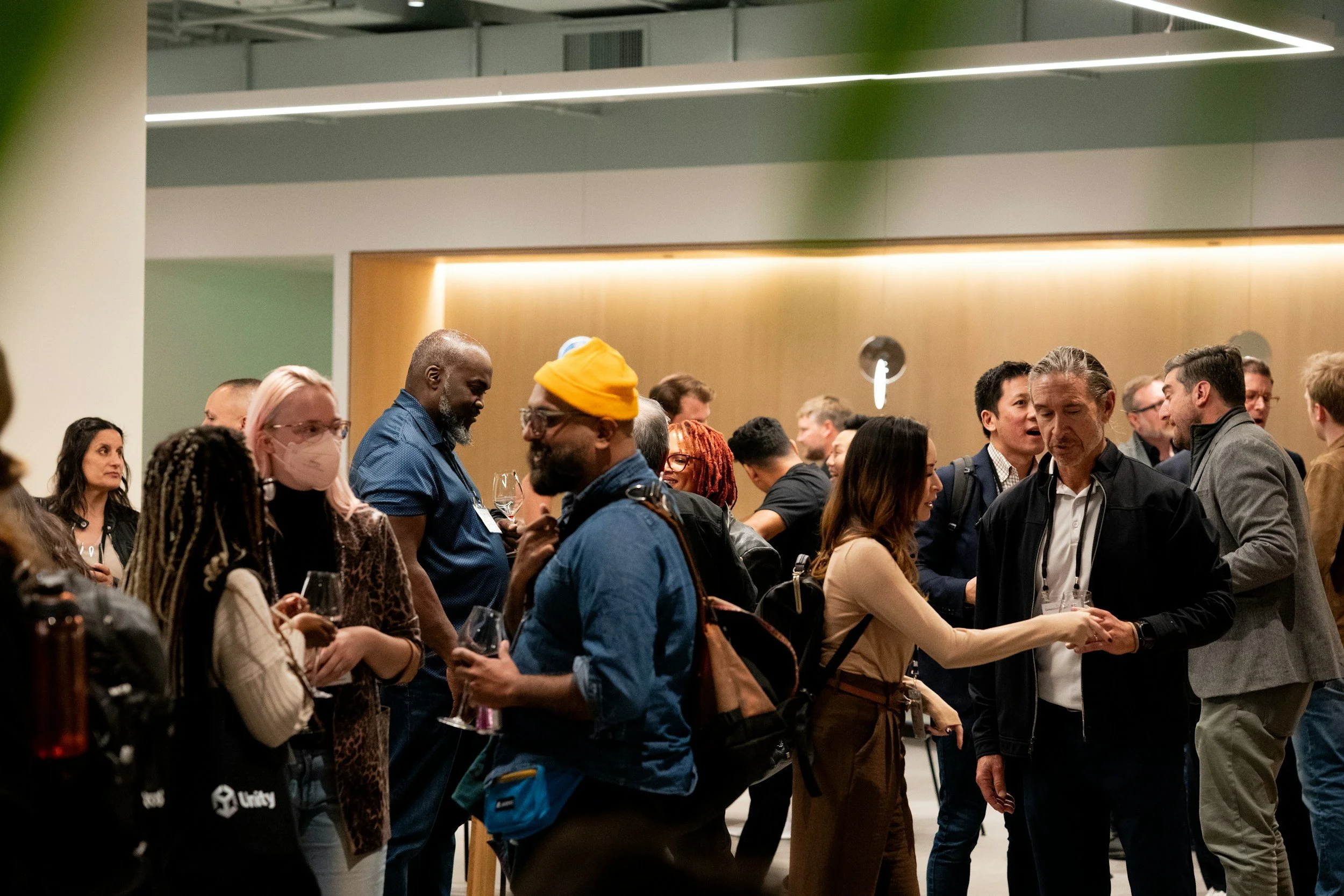
I connect people with opportunity. What?
Sometimes, even when I write that down or say it out loud, I have to catch myself from looking perplexed. But that is the exact reaction I am looking for.
Recruiting is a fine profession. There are millions of recruiters across the world. But recruiting is just the medium through which I help people. I also happen to be a real estate agent. I am also the President of the Danbury Drum Corps.
In 2018 I left my job at Havas as a Senior Recruiter to pursue an HR Manager role. Did I lose my identity because I left recruiting? I could have. And for a moment I think I did. Because I had built my entire professional identity around a job title. When the title changed, I felt the ground shift underneath me.
That is the cost of letting your job be your brand. When the job moves, so does everything you thought you knew about yourself.
I did not connect the dots of my career until much later. I did not see the thread that had been running through every role I ever had.
I became a real estate agent in 2021. I became President of the Danbury Drum Corps in 2024. But I had already been Vice President of the Drum Corps since 2017, in charge of recruiting new members. I was recruiting as a passion for an organization I loved for 20 years before I ever called it recruiting.
One sentence replaced my job title: I connect people with opportunity.
I do not even have a specialty in recruiting. You can Google tech recruiters, advertising recruiters, finance recruiters. I have done all of it.
2012 to 2013: IT
2013 to 2018: Marketing and advertising
2018 to 2019: Logistics
2019 to 2020: Finance and engineering
2020 to present: Advertising exclusively
Permanent roles. Freelance. Every discipline. The medium kept changing. The brief never did.
Disciplines can be learned. Mediums can be learned. My identity is my identity. It does not matter what the opportunity is. If I can help someone, I am going to be there. Recruiting. Real estate. Drum Corps. That is what fills my cup.
Alan Weiss wrote: “Your value is not what you do. It is what you are.”
That sentence stopped me cold when I first read it. Because it is the whole argument in eight words.
Your job title describes an output. Your brief describes a person. One disappears when the economy shifts, when a company restructures, when you decide to leave. The other goes with you into every room you ever walk into for the rest of your career.
Most people spend their entire working lives optimizing the output and never once ask about the person underneath it.
Here is how to find yours. It does not take long. Three steps.
Write down every job you have ever had. Go back as far as you can. Include the part-time ones, the ones you are embarrassed by, the ones that felt like detours.
Next to each one, write what you actually did for people. Not your title. Not your responsibilities. What did someone have after interacting with you that they did not have before?
Then look for the pattern. It is there. It has always been there. One sentence will start to form that connects all of them. That sentence is your brief.
It is not your LinkedIn headline. It is not your about me section. It is the one thing that would still be true tomorrow if every credential on your resume disappeared overnight.
For me it took 14 years and a career transition that shook my confidence to find it. But once I found it, every decision became clearer. Every conversation became more honest. Every new opportunity became easier to evaluate.
I connect people with opportunity.
What would your sentence be?
